For Students
Resources and guidance to help students prepare for training, placements, group discussions, and interviews.
Group Discussion (GD) Tips
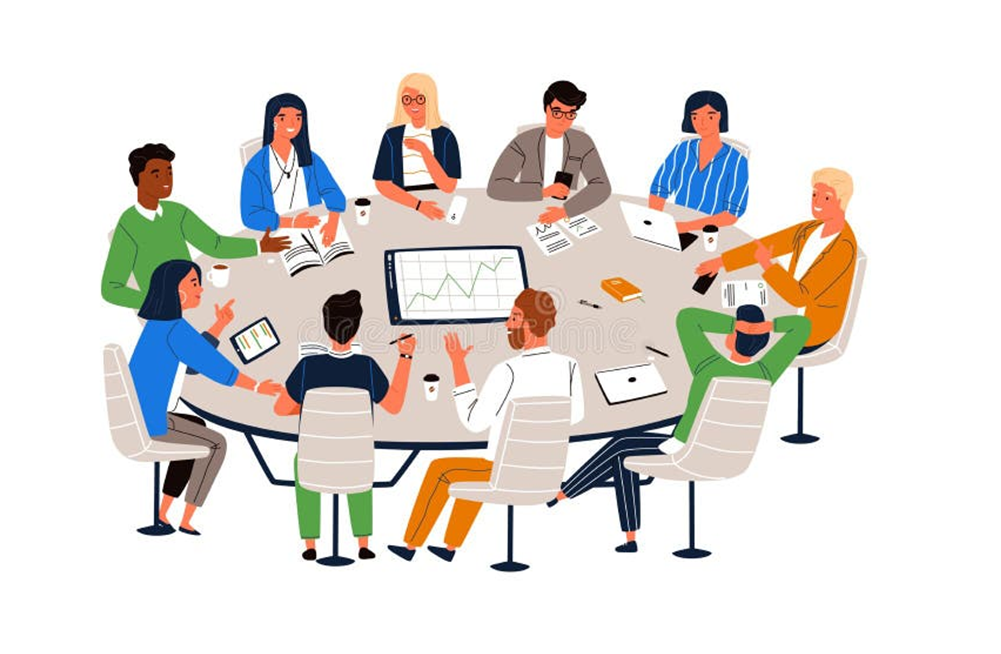
Group Discussion: A Key Tool for Professional & Career Development
Group Discussion (GD) is one of the most widely used assessment and learning techniques in academic institutions, corporate organizations, and administrative services. It is a structured and purposeful interactive process in which participants exchange ideas, opinions, facts, and perspectives on a given topic, issue, or problem through effective oral communication.
In a typical Group Discussion, participants are seated in a circular or semi-circular arrangement, enabling active interaction and exchange of viewpoints. The objective is not only to evaluate subject knowledge but also to assess communication abilities, leadership qualities, analytical thinking, teamwork, confidence, and decision-making skills.
Success in a Group Discussion depends upon several critical factors, which are outlined below.
1. Subject Knowledge & Awareness
A strong foundation of subject knowledge is essential for meaningful participation in a Group Discussion. Participants should possess a clear understanding of the topic and be capable of contributing relevant facts, opinions, and insights.
Students are encouraged to stay informed about::- Current national and international affairs
- Economic and social developments
- Scientific and technological advancements
- Environmental and sustainability issues
- Government policies and reforms
- Business and industry trends
- Contemporary debates and emerging challenges
Regular reading of newspapers, magazines, journals, research articles, and authentic online resources significantly enhances knowledge and awareness. Well-informed participants demonstrate greater confidence, originality, and depth of analysis, which often distinguishes them during evaluation.
The ability to generate innovative ideas, critically analyze information, and provide practical solutions frequently positions an individual as a natural leader within the discussion group.
2. Effective Communication Skills
Knowledge becomes valuable only when it can be communicated effectively. Therefore, communication skills are among the most important parameters assessed during a Group Discussion.
Effective communication involves:- Speak confidently and clearly.
- Express ideas logically and coherently.
- Use appropriate vocabulary and tone.
- Maintaining a positive and professional tone
- Demonstrating active listening skills
- Using suitable non-verbal communication
Participants who communicate their ideas with clarity and conviction are more likely to influence the discussion positively and leave a strong impression on the evaluators.
3. Active Listening Skills
Listening is as important as speaking. Active listeners understand viewpoints better and contribute more effectively.
- Pay attention to speaker.
- Respect differing opinions.
- Build on others’ ideas.
- Avoid unnecessary interruptions.
- Contribute constructively to the discussion.
Strong listening skills reflect maturity, teamwork, and leadership potential, qualities highly valued by recruiters and evaluators.
4. Clarity of Thought & Expression
The ability to organize thoughts and present them in a structured manner is a critical success factor in Group Discussions.
Participants should:- Present ideas logically
- Support arguments with facts and examples.
- aintain consistency in viewpoints
- Speak with confidence and appropriate voice modulation
- Avoid ambiguity and unnecessary repetition
Clear articulation and precise expression make communication more persuasive and impactful.
5. Appropriate Use of Language
Language plays a vital role in conveying ideas effectively.
Participants should:- se simple, professional, and grammatically correct language
- Avoid slang, jargon, and overly complex expressions
- Be concise and relevant
- Maintain politeness and courtesy throughout the discussion
- Express disagreement respectfully and constructively
A professional communication style enhances credibility and creates a positive impression.
6. Positive Non-Verbal Communication
Non-verbal communication significantly influences how participants are perceived during a Group Discussion.
Important non-verbal elements include:- Maintaining appropriate eye contact
- Confident posture and body language
- Positive facial expressions
- Controlled gestures
- Professional appearance and demeanor
Evaluators often assess personality traits such as confidence, cooperation, emotional stability, leadership, and interpersonal effectiveness through these non-verbal cues.
7. Teamwork & Group Behaviour
Group Discussion is a team activity. Successful participants contribute actively while supporting the overall discussion.
Effective participants demonstrate:- Respect for differing viewpoints
- Patience and emotional maturity
- Cooperation and team spirit
- Conflict management skills
- Leadership without domination
- Encouragement of quieter members to participate
- Initiator
- Information Provider
- Clarifier
- Facilitator
- Opinion Giver
- Summarizer
- Motivator
- Consensus Builder
The most successful participants strike a balance between active contribution and collaborative engagement.
8. Leadership & Influence
Leadership in a GD is demonstrated through constructive participation rather than domination.
A strong participant:- Introduce valuable ideas.
- Provide logical reasoning.
- Encourages healthy discussion.
- Maintains focus on the topic.
- Helps build consensus among members.
The ability to influence others through logic, facts, and respectful communication is often regarded as a key indicator of leadership potential.
Conclusion
Group Discussions provide an excellent platform for assessing a candidate's knowledge, communication skills, analytical thinking, emotional intelligence, leadership qualities, and team orientation. Success in a GD depends on a balanced combination of subject expertise, effective communication, active listening, positive body language, and collaborative behavior.
Students who continuously develop these competencies are better prepared for campus recruitment processes, higher education opportunities, competitive examinations, and professional leadership roles in the future.
Interview Preparation Tips

Interview Preparation, Professional Etiquette, and Placement Discipline Guidelines
Success in campus recruitment and professional interviews depends not only on academic achievements but also on preparation, professionalism, communication skills, and personal conduct. Students are expected to demonstrate confidence, discipline, and a professional attitude throughout the recruitment process.
1. Arrive Prepared and Punctual
Punctuality is a fundamental professional expectation. Students should plan their travel in advance and arrive at the interview venue at least 15–20 minutes before the scheduled time.
Carry the following:- Multiple copies of updated Resume/CV
- Academic documents and certificates
- Reference details and supporting credentials
- Portfolio or project samples
- Notepad and pen
2. Creating a Strong First Impression
- Greet everyone courteously and respectfully.
- Maintain a pleasant and professional demeanor.
- Smile naturally and maintain eye contact.
- Offer a professional handshake where appropriate.
- Demonstrate enthusiasm and genuine interest.
3. Professional Dress Code
For Male Students
- Formal collared shirts
- Formal trousers
- Well-groomed appearance
- Shirt neatly tucked in
- Formal shoes
For Female Students
- Formal Salwar-Kameez
- Formal shirt and trousers
- Professional attire
- Formal footwear
4. Discipline and Professional Conduct
- Report on time for all placement activities.
- Follow company instructions.
- Maintain professional behavior.
- Represent the University with integrity.
5. Importance of Positive Body Language
✓ Positive Body Language
- Eye contact
- Confident posture
- Natural smile
- Active listening
- Purposeful gestures
✗ Behaviors to Avoid
- Slouching
- Fidgeting
- Looking away frequently
- Playing with objects
- Chewing gum
6. Communicate with Confidence and Authenticity
- Answer questions truthfully.
- Focus on relevant achievements.
- Support responses with examples.
- Stay calm under pressure.
- Demonstrate enthusiasm.
7. Maintain a Positive Professional Attitude
- Respect employers, faculty, and colleagues.
- Avoid criticism and blame.
- Demonstrate emotional intelligence.
- Show adaptability and teamwork.
- Maintain a solution-oriented mindset.
Conclusion
Successful interview performance is the result of thorough preparation, professional appearance, effective communication, disciplined behavior, and a positive mindset.
The Training and Placement Cell encourages all students to uphold these standards and represent themselves and the University with confidence, professionalism, and integrity.
Resume Writing Tips

Guidelines for Effective Resume Writing and Professional Profile Development
A resume is one of the most important tools in the job search process. It serves as a professional marketing document that highlights an individual's qualifications, skills, achievements, and career potential. An effective resume should be concise, relevant, well-structured, and tailored to the requirements of the position being applied for.
The following guidelines will help students and job seekers develop professional resumes that create a strong impression on recruiters and increase their chances of securing interview opportunities.
1. Keep Information Recent and Relevant
A resume should focus on the most relevant aspects of a candidate’s academic and professional journey.
Candidates should:- Include the most recent 10–15 years of professional experience, where applicable.
- Emphasize experiences directly related to the target position.
- Prioritize recent achievements and responsibilities.
- Provide greater detail for positions that demonstrate relevant skills and accomplishments.
For students and fresh graduates, internships, academic projects, research work, certifications, and extracurricular achievements should be carefully selected based on their relevance to the desired role.
2. Maintain a Simple and Professional Format
Recruiters often spend only a few seconds reviewing a resume; therefore, clarity and readability are essential.
Recommended Formatting Practices:- Use professional fonts such as Arial, Calibri, Helvetica, or Century Gothic.
- Maintain a font size between 10 and 12 points.
- Use clear section headings and consistent formatting.
- Ensure adequate white space for improved readability.
- Avoid excessive graphics, colors, and decorative elements.
3. Keep the Resume Concise
- Present information in a concise and focused manner.
- Eliminate unnecessary details and repetitive content.
- Highlight only the most relevant qualifications and achievements.
Experienced professionals may require additional space; however, every section should add value and support the application.
4. Include Only Relevant Information
- Highlight accomplishments relevant to the position.
- Customize the resume for each application whenever possible.
- Focus on measurable achievements and outcomes.
- Exclude outdated or unrelated experiences.
5. Make Contact Information Clearly Visible
Essential Contact Details:- Full Name
- Mobile Number
- Professional Email Address
- LinkedIn Profile URL
- Professional Portfolio
- Personal Website (if applicable)
6. Seek Professional Guidance When Necessary
Seek assistance from:- Training and Placement Cell professionals
- Career counselors
- Faculty mentors
- Industry experts
- Professional resume reviewers
Constructive feedback can significantly improve the effectiveness and presentation of a resume.
7. Avoid Generic and Overused Expressions
Instead, demonstrate these qualities through achievements, responsibilities, and measurable outcomes.
8. Prioritize Professional Experience
Recommended Resume Structure:- Professional Summary
- Work Experience / Internships
- Skills and Certifications
- Projects and Achievements
- Education
- Additional Information
Fresh graduates may place education before experience if academic achievements represent their strongest credentials.
9. Highlight Relevant Skills
Technical Skills
- Programming Languages
- Software Applications
- Data Analysis Tools
- Design Software
- Industry-Specific Technologies
Professional Certifications
- Technical Certifications
- Industry Credentials
- Professional Training Programs
- Online Learning Certifications
10. Demonstrate Soft Skills Through Achievements
Instead of simply stating skills, demonstrate them through achievements:
- Led a team project involving multiple stakeholders.
- Coordinated an event attended by over 500 participants.
- Presented research findings at a national conference.
- Managed cross-functional project activities successfully.
Employers place greater value on evidence-based accomplishments than on unsupported claims.
Conclusion
An effective resume is a strategic document that communicates a candidate’s value, achievements, and professional potential.
The Training and Placement Cell encourages all students to regularly update their resumes, seek professional feedback, and tailor their applications to meet industry expectations. A well-crafted resume serves as the foundation for a successful job search and a rewarding professional career.
Interview Do's & Don'ts

Essential Interview Preparation and Professional Conduct Guidelines
Effective interview preparation is a critical component of career success. A well-prepared candidate demonstrates professionalism, confidence, industry awareness, and a genuine interest in the organization.
1. Conduct Thorough Research
Students should research:
- Organization’s history, vision, mission, and values
- Products, services, and business operations
- Industry trends and market position
- Recent achievements and developments
- Leadership team and organizational structure
- Job responsibilities and role expectations
2. Prepare Relevant Questions for the Interviewer
- Job responsibilities and expectations
- Team structure and reporting relationships
- Learning and growth opportunities
- Organizational culture and work environment
- Performance evaluation processes
- Training and professional development programs
3. Dress Professionally
- Wear clean, well-fitted formal attire.
- Maintain proper grooming.
- Present a professional appearance.
- Avoid excessive accessories or distracting attire.
4. Arrive Early and Be Well Prepared
- Confirm interview location in advance.
- Plan your route beforehand.
- Account for delays and traffic.
- Keep documents organized.
- Arrive at least 15 minutes early.
5. Maintain a Professional and Positive Demeanor
- Greet interviewers confidently and respectfully.
- Listen attentively.
- Maintain eye contact.
- Demonstrate enthusiasm and interest.
- Respond with clarity and professionalism.
6. Seek Permission Before Taking Notes
Benefits of note-taking:
- Recording important information.
- Remembering discussion points.
- Demonstrating professionalism.
- Supporting follow-up communication.
7. Respond with Confidence and Honesty
- Be honest and transparent.
- Focus on strengths and accomplishments.
- Support responses with examples.
- Remain calm when discussing challenges.
- Highlight lessons learned.
Conclusion
Successful interview performance is built upon preparation, professionalism, confidence, and effective communication.
Students should view interviews as opportunities to demonstrate their academic capabilities, leadership potential, and workplace readiness.
Interview Etiquette: Common Mistakes to Avoid
Avoiding common interview mistakes can significantly improve a candidate's chances of success and help create a positive impression on recruiters.
1. Avoid Sharing Excessive Personal Information
Do not discuss:
- Personal financial circumstances
- Family or marital status
- Personal relationships
- Private matters unrelated to the role
2. Avoid Premature Discussions About Salary and Benefits
- Focus on the role and responsibilities first.
- Demonstrate interest in contributing to the organization.
- Discuss compensation at the appropriate stage.
3. Avoid Excessive Talking
- Listen carefully before responding.
- Stay focused on the question asked.
- Avoid repetitive or unrelated details.
- Keep responses concise and relevant.
4. Avoid Arriving Late
- Plan travel in advance.
- Anticipate traffic and delays.
- Arrive 10–15 minutes before the scheduled time.
- Complete reporting formalities early.
5. Avoid Excessive Self-Promotion
- Do not appear arrogant.
- Support achievements with measurable results.
- Acknowledge teamwork and collaboration.
- Maintain humility and professionalism.
6. Use Achievement Portfolios Effectively
Portfolios may include:
- Certificates and awards
- Project summaries
- Research work
- Internship accomplishments
- Professional recognitions
7. Avoid Negative Attitudes and Criticism
Never criticize:
- Previous employers
- Managers or supervisors
- Colleagues or team members
- Educational institutions
- Former organizations
Always remain professional, constructive, and solution-oriented.
Final Takeaway
Interview success depends as much on avoiding common mistakes as it does on demonstrating strengths. Professional conduct, punctuality, balanced communication, thoughtful preparation, and a positive attitude significantly influence recruiter perceptions.
By avoiding these common pitfalls and maintaining professionalism throughout the process, students can enhance their employability and long-term career success.